The 15-Minute Meal Framework: How to Automate Dinner Without Cooking From Scratch
The most stressful hour in the American household is 5:00 PM. It is the moment when the “Executive Function” of the Household CEO is at its lowest, yet the demand for a high-stakes decision—what is for dinner?—is at its highest. Most people attempt to solve this by searching for new recipes or “meal prepping” for five hours on a Sunday. But recipes are instructions, not systems.
To eliminate the 5:00 PM panic, you don’t need more recipes. You need a Modular Meal Framework. This system shifts the focus from “cooking a dish” to “assembling components,” allowing you to get a high-quality, nutritious meal on the table in 15 minutes or less.
The Science: Decision Fatigue and the “Mise en Place” Mindset
In psychology, Decision Fatigue describes the declining quality of decisions made by an individual after a long period of decision-making. By the time dinner rolls around, your brain has already processed thousands of choices. Adding a complex recipe to this state is a recipe for burnout (and a $60 UberEats bill).
Professional chefs combat this through Mise en Place (everything in its place). However, for the Household CEO, Mise en Place isn’t just about having chopped onions; it’s about having Pre-Processed Components. When the building blocks of a meal are already “staged” in your fridge, the cognitive load of “cooking” drops by 80%.
Step 1: The Modular Strategy (Component Cooking)
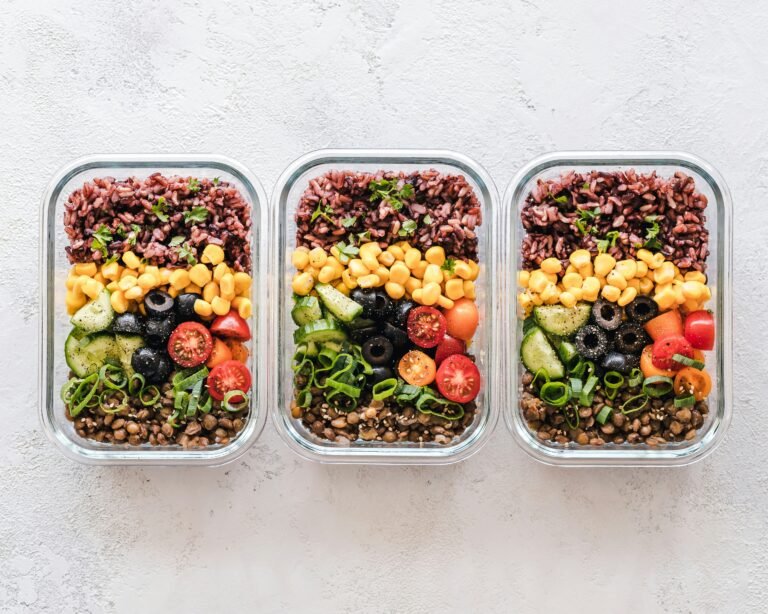
Instead of cooking a “Lasagna” or a “Stir-fry,” you cook categories. During your Sunday Reset, or even during a quiet Tuesday evening, you prepare three modules:
- The Base: A large batch of grains (quinoa, brown rice, farro) or roasted tubers (sweet potatoes).
- The Protein: Two types of versatile proteins (shredded chicken, seasoned ground beef, or baked tofu).
- The “Flavor Bridge”: Two homemade or high-quality store-bought sauces (pesto, tahini dressing, or a spicy peanut sauce).
Step 2: The 15-Minute Assembly Line
When dinner time arrives, you are no longer “cooking.” You are Assembling. A modular fridge allows for infinite combinations:
- Night 1: Grain bowl with shredded chicken, greens, and tahini dressing.
- Night 2: Tacos using the ground beef and pre-chopped veggies.
- Night 3: Protein-packed salad using the base grains as a “filler.”
Because the “hot” elements only need reheating and the “cold” elements are already washed and chopped, the transition from “hungry” to “eating” happens in the time it takes to set the table.
Step 3: The “Pantry Matrix” for Emergencies
Automation requires a backup. Your “Pantry Matrix” is a set of three “Uniform Meals” that use only shelf-stable or long-life ingredients (e.g., red lentil pasta with jarred marinara, or a “Mediterranean Plate” with canned chickpeas, olives, and crackers). These are your Zero-Decision Meals. When the day has been truly chaotic, you don’t think; you simply trigger the Matrix.
The ROI: Reclaiming the “Golden Hour”
The hour between 5:00 PM and 6:00 PM should be the “Golden Hour” for family connection, not a frantic battle with a frying pan. By automating the mechanics of dinner through a modular framework, you reclaim your mental energy for what matters: hearing about your kids’ day or enjoying a moment of quiet with your partner.
In the world of the Household CEO, efficiency isn’t about working harder; it’s about designing systems that make the right choice the easiest choice. Dinner shouldn’t be a daily crisis; it should be a background process that supports your family’s health and wealth.